Physical Address
304 North Cardinal St.
Dorchester Center, MA 02124
Physical Address
304 North Cardinal St.
Dorchester Center, MA 02124
Talk is Cheap, Let’s Do the WordPress!
Talk is Cheap, Let’s Do the WordPress!
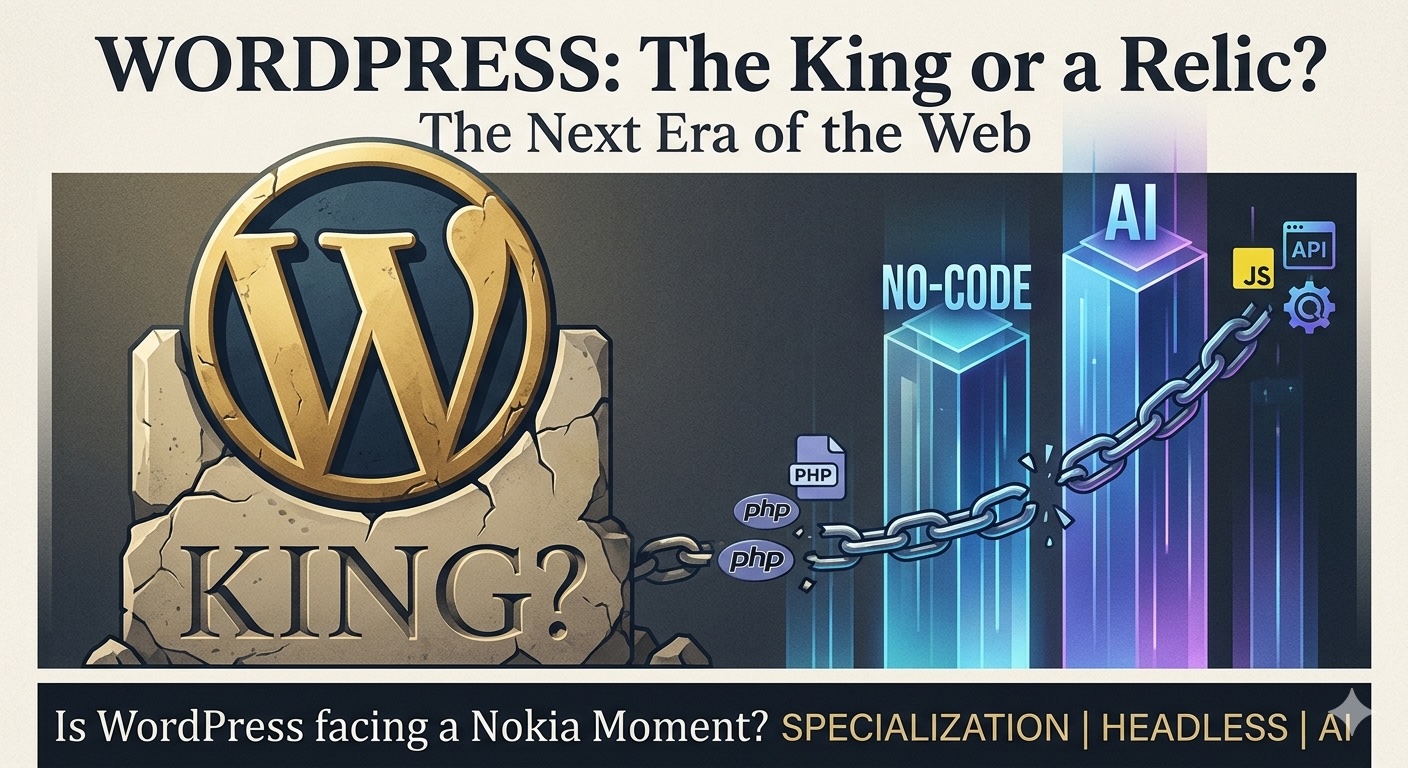
For over two decades, WordPress has been the undisputed monarch of the web, powering over 43% of all websites. Its reign was built on a simple foundation: the ubiquitous availability of PHP hosting environments and an open-source (GPL) ecosystem that turned beginners into webmasters.
However, as we move deeper into the 2020s, the landscape is shifting. Does WordPress still hold the crown, or are we witnessing the rise of competitors that could finally dethrone it?
1. The Invincible Fortress: Why WordPress Still Dominates
To understand its future, we must acknowledge why WordPress hasn’t been beaten yet. It isn’t just software; it’s an economic gravity well.
2. The Three Fronts of Attack: Who are the Real Competitors?
While no single “WordPress Killer” exists, the platform is being eroded from three distinct directions:
A. The Experience Disruptors: SaaS & No-Code (Framer, Webflow, Shopify)
The “lazy” user is WordPress’s biggest threat. Modern users don’t want to manage PHP versions, database backups, or plugin conflicts.
B. The Technical Vanguard: Headless CMS (Strapi, Contentful, Next.js)
To the new generation of developers, PHP is a “legacy language.” They prefer the JAMstack—using JavaScript, APIs, and Markup.
C. The Paradigm Shifter: Generative AI (10Web, Framer AI)
This is the “Black Swan” event for WordPress.
3. Conclusion: Evolution or Extinction?
WordPress is not going to disappear overnight. Its GPL-based economy and massive installed base provide a buffer that will last for a decade or more. However, its “all-in-one” dominance is ending.
We are entering an era of Specialization:
Final Verdict: WordPress isn’t being replaced by a competitor; it is being bypassed by simplicity. The real “WordPress Killer” isn’t another CMS—it is an AI prompt that makes the CMS invisible.